If you have ever been interviewed for a local magazine, you know how it goes. Someone asks you to summarize years of mud-covered clothes, kiln disasters, and life leaps into a few tidy answers.
David and I recently had a feature with Voyage Denver about our life, our work, and how Castor Ceramics got started.Seeing it published felt a little surreal. Mostly it reminded me how accidental the whole thing was at the beginning, and how much context gets trimmed when a story has to fit inside a Q&A format. Since this is our own site and nobody here is counting words, I wanted to share the fuller version. Think of it as the longer cut with the parts that did not make the short version.
Texas Roots and Making Things That Earn Their Keep
Long before I ever touched a bag of clay, I grew up in Austin and spent weekends and holidays at my grandparents' ranch in Wimberley, Texas. My grandmother was endlessly crafty. She taught me to draw, to paint, and to walk creek beds looking for arrowheads. Drawing and arrowhead hunting take the same kind of quiet focus. You slow down, read the ground, and train your eye to spot what belongs there.
My dad, who my brothers and I oft refer to as Cowboy Rob, brought a dry, practical grit to how I grew up. Between him and my grandmother, I picked up a pretty simple standard for things we keep in our house: make them honest, make them useful, and make them last.
David came at it from a completely different map. He grew up in a military family moving all over the United States, spending his formative years between Hawaii, Colorado, and Texas. Moving that much teaches you how to adapt fast,figure things out with whatever is in front of you, and appreciate objects that can actually survive being packed up and used in real life.
That shared baseline is still how we approach Castor. We are not making fragile pieces meant to sit behind glass. I want mugs you reach for half-awake after a night out.
A Rec Center Conversation That Forced Our Hand
Castor officially started in 2021, though it began with a conversation neither of us saw coming.
David was teaching a pottery class at a local recreation center. One evening, after everyone had wiped down their wheels,rinsed their sponges, and packed up for the night, one of his students hung back. He told David that his late wife, Sandy,had spent her life as a potter. Her studio tools and equipment were still sitting there, and he wanted them to go to people who would actually love them, care for them, and put them back to work. He asked if we would take them.
Saying yes took maybe two seconds. Figuring out where to put everything took considerably longer. At the time, we lived in a small townhome with zero space for a pottery wheel, let alone a kiln or shelves of clay. Accepting Sandy's tools meant making a pact with ourselves right then and there: we were going to buy a house with a garage and build a real studio.
When we went over to start picking up pieces of her studio, that pact took on a whole different weight. Sandy's husband had laid out photographs from across their life together, spanning different decades, different ages, and all the seasons of their relationship. Standing there looking through those photos was one of the most moving moments of this entire journey.
We never got the chance to meet Sandy in person, yet here we were surrounded by the physical proof of a life well lived and a craft she genuinely loved. You could see the years in her tools, the wear on the wooden ribs, and the care that went into the space she had built for herself. Seeing those pictures next to her studio setup made it clear that we were not just hauling home secondhand gear. We were stepping into the middle of someone else's story, carrying forward tools that meant the world to her and to the person who loved her.
Knowing the depth of the life she lived, and how deeply her husband wanted her work to keep going in good hands,changed how we looked at Castor from that day forward. Every time we unpack those tools or set them out on our own worktable now, there is a real sense of gratitude behind it. We wanted to honor her craft properly, and that visit made sure we never took the opportunity lightly.
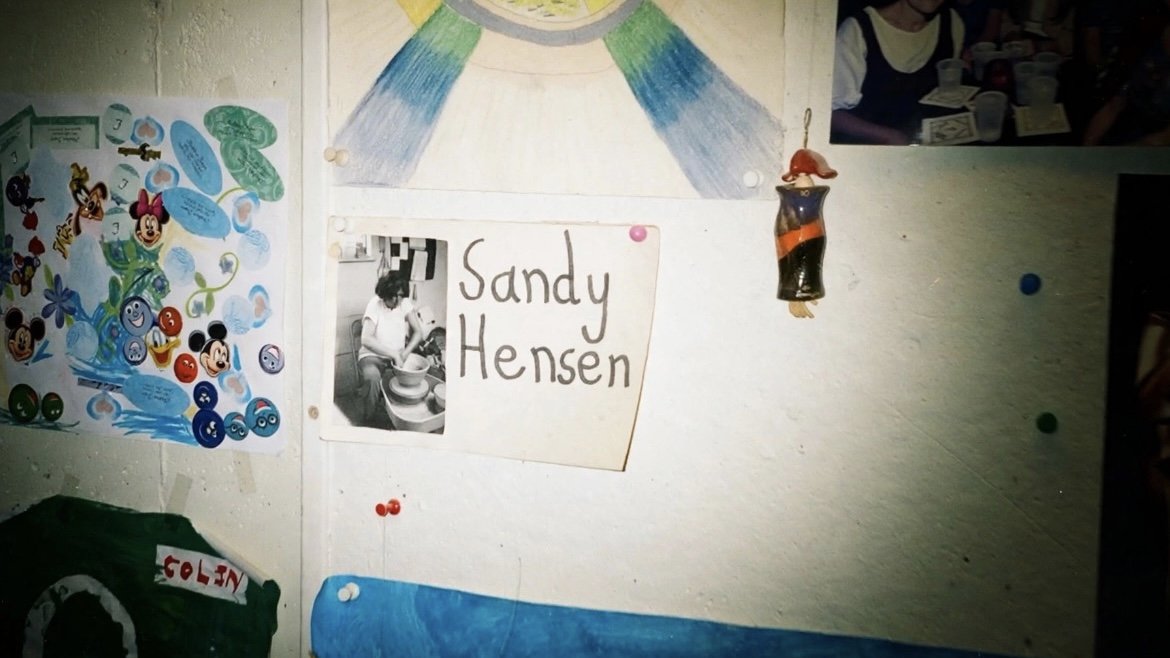
Taken in Sandy’s Studio when we were moving October 16th 2020
Three Years in Tight Quarters (and Learning How to Work Together)
For the next three years, we ran Castor out of cramped spaces while figuring out what we were doing. We sold wholesale,hauled delicate pieces across town, and set up at local Denver markets. Those early markets taught us fast which shapes people picked up first, which glazes sold out, and how early you have to wake up to load a booth before sunrise.
Tight quarters also put our partnership under a microscope. Working alongside your spouse gets messy fast if both of you are trying to steer the same wheel at once. Over time, our rhythm settled into something clear, even with plenty of overlap.
David is the maker and technical backbone of the studio. He has the patience and mechanical mind for throwing,trimming, testing clay bodies, and running kiln schedules. When a mug needs to feel balanced in your hand or hold up through repeated firings without warping or cracking, David is the one figuring out why.
I focus on color theory, glaze palettes, product direction, photography, and how Castor shows up in the world. I care a lot about mood, proportion, color relationships, and the story behind each batch.
On paper, it looks like a neat split. In real life, it is constant debate, dry jokes, and tinkering. I will walk into the studio hyped about a color pairing I saw on an old Western saddle or a desert hillside, and David will put on his technical hat to figure out how to get a glaze to do that in the kiln without running all over the shelf. Sometimes his technical reality check saves me from a glaze mess. Sometimes my color obsession pushes him to test something he might not have tried on his own.
Finally Getting a Garage in Valverde
In the summer of 2024, we finally bought our house in Denver's Valverde neighborhood. It came with a 100-year-old garage in the backyard, and we turned it into our studio.
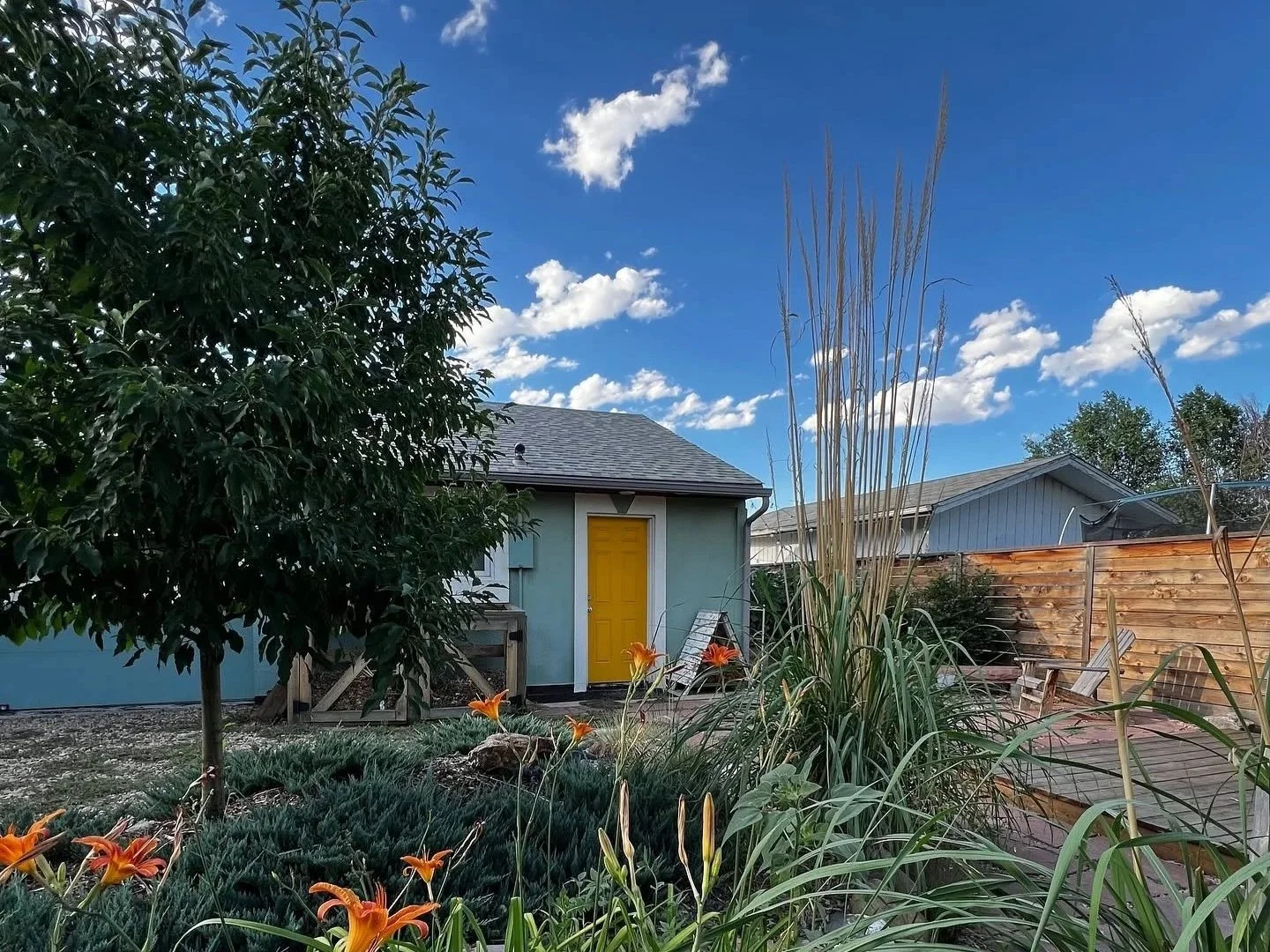
Our Studio!
Having a dedicated workshop changed our days completely. In a townhome, every batch felt like a puzzle of boxes and tight corners. Once we had a real studio, we could leave test tiles lined up, keep raw materials organized, tighten up our shipping packaging so orders arrive safely, and build out collections without tripping over gear.
It also gave us room to keep learning. Whenever David and I travel abroad, we make a point to take a local pottery workshop and learn straight from makers working in traditional ways. Studying barro negro and stone-burnishing in Mexico City, then bringing that back to our own benches, is a good reminder that clay is an ongoing conversation across places and generations. You never really finish learning it. Clay just hands you new problems to solve.
The Unglamorous Parts (and Why the Feature Felt Worth It)
For every clean studio photo or finished mug on a shelf, there is plenty of unglamorous work behind it. Reclaiming buckets of scrap clay, wiping down dust, dealing with kiln quirks, answering emails, and lifting heavy crates at markets are all part of the job.
Getting featured in Voyage Denver was a nice milestone because it let us step back and see the full arc. It started with a quiet conversation after a rec-center class and led to a studio in Valverde.
If you want to read the original interview, you can check out the full Voyage Denver Q&A. And if you are already looking around our site, take a peek at what we have been making lately. Every piece traces back to a set of tools passed down with care, a stubborn promise to find a garage, and two people who still like making things with their hands.